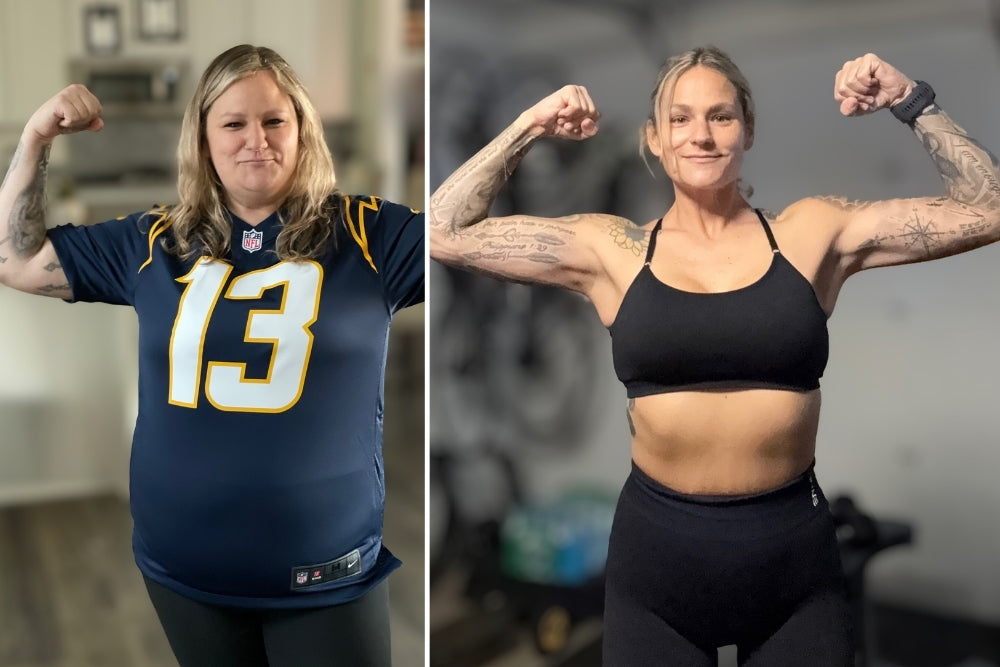


Train Like You’re Getting Strong Again
Getting back into the gym after a break can feel mentally tougher than starting for the first time. You remember what it felt like to be stronger, faster, and more confident, which can make the gap feel bigger than it really is. The good news is this: you’re not starting over. Your body already knows how to train. It just needs a reminder.
Strength training creates long-lasting adaptations in muscle tissue and the nervous system. Even after time away, those adaptations don’t disappear completely. Research consistently shows that people who have trained before regain strength faster than first-time lifters once they return to consistent workouts.
A 2018 review published in Frontiers in Physiology found that prior resistance training allows individuals to recover strength and muscle size more efficiently after a period of detraining, a phenomenon commonly referred to as muscle memory.
Why a Break Doesn’t Erase Your Progress
When you lift weights, your body adapts in more ways than just building muscle. Your nervous system becomes better at recruiting muscle fibers, coordinating movement, and producing force. These neurological adaptations tend to stick around longer than muscle mass alone.
According to the American Council on Exercise, strength and endurance do decline during periods of inactivity, but the loss happens gradually. Many of the movement patterns and coordination developed through training remain, making it easier to rebuild when you return.
That’s why the goal of your comeback phase isn’t chasing old numbers. It’s restoring capacity safely so your body can re-adapt without excessive soreness or injury.
The Right Mindset for Getting Back into the Gym
One of the most common mistakes people make when returning to training is trying to pick up exactly where they left off. That approach often leads to joint pain, stalled motivation, or burnout.
Fitness experts regularly emphasize that consistency matters more than intensity during this phase. Editors and trainers featured in Men’s Fitness and Women’s Fitness frequently highlight that manageable workouts performed regularly lead to better long-term adherence than aggressive programs that are hard to sustain.
Think of this phase as reconditioning. You’re rebuilding tolerance, refining movement, and creating momentum.
How to Train When You’re Getting Strong Again
A full-body routine works well when returning to the gym because it spreads workload evenly and reinforces movement patterns multiple times per week.
Here’s a simple, gym-based workout designed to rebuild strength, confidence, and consistency.
The “Get Strong Again” Full-Body Workout
Warm-Up (5–7 minutes)
Don't skimp on the warm-up if you're getting back into the gym after a long break. Warming up helps avoid injury.
- 3 minutes of light cardio (treadmill walk, bike, or rower)
- Bodyweight squats x10
- Arm circles x10 each direction
- Glute bridges x12
- Cat-cow stretch x6
Strength Workout
Complete 3 sets per exercise then move onto the next. Rest 60–90 seconds between exercise. Note: choose weight resistance that allows you to feel like you could perform at least two or three more reps at the end of each set. This approach helps limit soreness, supports recovery, and makes it easier to stay consistent. (Mild soreness is normal. Feeling wrecked is not a requirement for progress.)
Complete 3 sets per exercise then move onto the next. Rest 60–90 seconds between exercise. Note: choose weight resistance that allows you to feel like you could perform at least two or three more reps at the end of each set. This approach helps limit soreness, supports recovery, and makes it easier to stay consistent. (Mild soreness is normal. Feeling wrecked is not a requirement for progress.)
- Goblet squat with kettlebell – 12–15 reps
- Lat pulldown or assisted pull-up – 12–15 reps
- Dumbbell bench press or push-ups – 10 –12 reps
- Romanian deadlift with dumbbells – 12 reps
- Plank – 30 seconds
Finish with 3–5 minutes of easy walking or cycling to bring your heart rate down.
How Often Should You Train?
Two to three full-body workouts per week is plenty during the first few weeks back. This frequency allows muscles and joints to adapt while still providing adequate recovery.
A 2020 study published in the Journal of Strength and Conditioning Research found that training major muscle groups two to three times per week supported strength gains while reducing injury risk in recreational lifters.
Support Training with Recovery and Nutrition
Rebuilding strength isn’t just about what happens in the gym. Nutrition matters. Adequate protein intake, quality carbohydrates, hydration, and sleep all play a role in supporting muscle repair and performance.
Experts cited by the American Council on Exercise consistently note that recovery habits often matter more than workout intensity, especially when returning after time away.
The Takeaway
Getting back into the gym doesn’t require extreme workouts or unrealistic expectations. It requires patience, consistency, and respect for the work your body has already done.
You’re not starting from scratch. You’re getting strong again — and that mindset makes all the difference.